Chairs First, Dice Later: Meet the Crew Who Build Gateshead's Game Nights
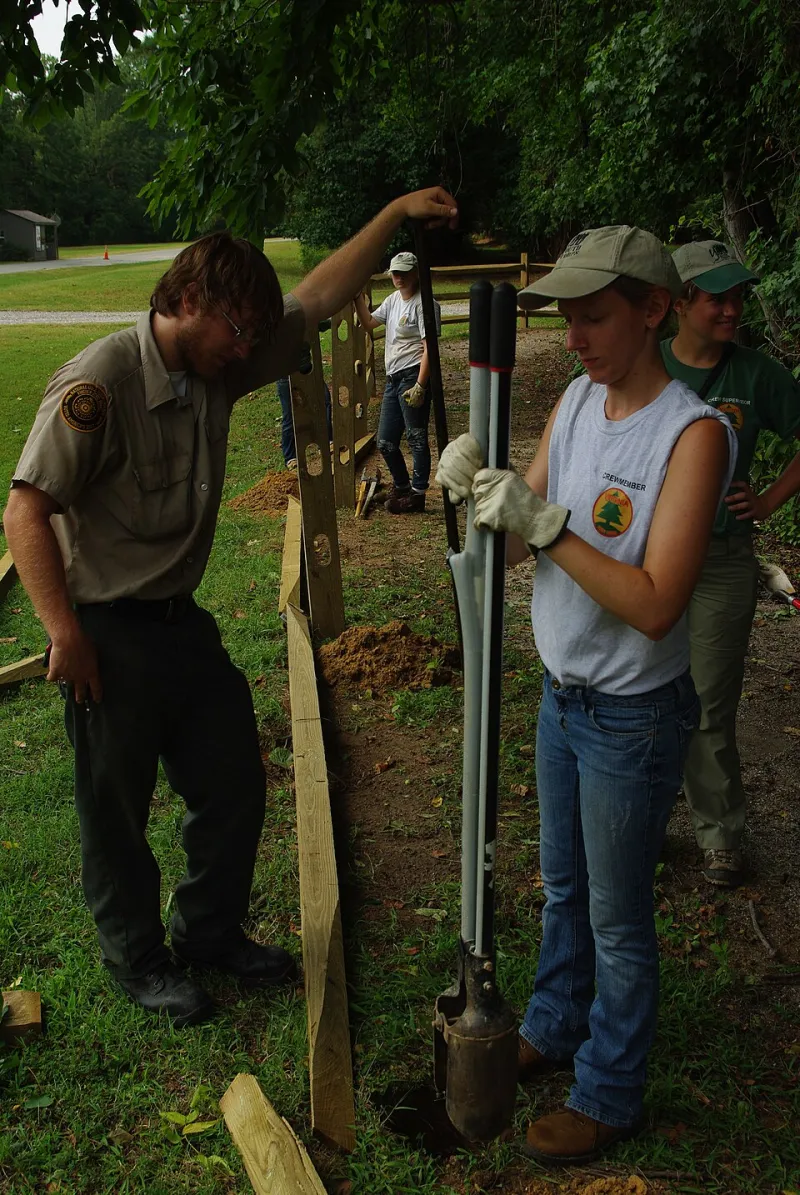
Photo: Virginia State Parks staff, CC BY 2.0, via Wikimedia Commons
It's 5:40pm on a Thursday and the function room above a Gateshead social club is nothing but stacked chairs and the smell of lemon polish. By seven it will be a gaming night: eight tables, a lending library, a corner kept quiet for the players who need it, a sign-in desk that doesn't queue and a wheelchair route that actually works.
The ninety minutes in between belong to four people whose names rarely make the poster.
The 5:40 Club
Every gaming night in the borough has one. Sometimes it's a committee, sometimes it's a couple, and quite often it's one person with a boot full of boxes and a slightly haunted look. They arrive before the venue staff have finished stacking the chairs. They leave after the last bag has been zipped.
Call it the setup shift. It isn't glamorous, it's rarely paid, and it is the single biggest reason a night feels effortless to everybody who walks in at ten to seven.
"We got tired of it being invisible," says Denise, who has run a Thursday club in the east of the borough for four years. "People would say 'that was lovely' and go home. Which is fine — that's the point, it should feel lovely. But nobody realised four of us were getting there at half five and leaving at half ten."
What Setting Up Actually Involves
Ask a newcomer what happens before a game night and they'll guess: put some tables out. Ask someone who does it and you get a list.
Tables. Trestle tables are heavier than they look and they are not a one-person lift. Two people, always, or you'll be the reason a volunteer spends Friday at the walk-in centre with a bad back.
Lighting. There's a reason the rules-heavy table ends up under the good light and the party game ends up near the bar. Glare on a card table is a genuine problem. So is the strip light that flickers for the first ten minutes — fine for a quiz, miserable for anyone prone to headaches.
Seating. Not just enough chairs: the right chairs. One with arms for the player who needs help standing, a lower table for someone managing fatigue, a bit of space so a wheelchair user isn't parked in a corridor.
The route. Where does a pram go? Where do coats go? Where does somebody go if the noise gets too much and they need five minutes? If you don't decide that before the doors open, a player will have to decide it for themselves, in front of everybody.
The kit. Sorting loaner games by weight is the quiet genius move of every good setup crew: fillers and party games near the door where the nervous people are, the four-hour brain-burners at the back where the regulars sit.
The Bit Nobody Photographs
There's a moment in every successful night — usually around twenty past seven — when the room has found its rhythm and the setup crew are suddenly surplus to requirements. They're standing near the kitchen hatch with a squash, watching.
"They don't get to play straight away," says Ellis, who helps run a monthly Sunday session in the west of Gateshead. "You're on call for the first hour. Somebody needs change for the raffle, somebody's lost a die, somebody's been sat on their own for ten minutes and needs introducing. That's the real job. The tables are just the beginning."
That on-call hour is why setup crews burn out. It's not the lifting. It's being switched on from the moment the doors open to the moment the last person leaves.
When the Load Lands on One Pair of Hands
The fragile version of this is a single person with a key, a spreadsheet and a WhatsApp group of sixty people who all assume somebody else is bringing the games.
The resilient version is duller and much better: a written setup sheet, a rota, a kit box that lives at the venue, and a rule that nobody lifts a trestle alone. Even a three-person rotation turns a chore into a shift — and a shift has edges. A start time, an end time, and a drink at the end of it that somebody else buys.
Six Ways to Make the Invisible Visible
- Name them. A line on the poster or the social post — "doors 7pm, thanks to the setup crew" — costs nothing and changes everything.
- Publish the setup time. "We start setting up at 5:45, come and help for twenty minutes" invites people in far more effectively than a vague appeal for volunteers.
- Split the role. Hauling, tech, welcome desk and packing down are different jobs with different appetites. Plenty of people will never lift a table but will happily run a sign-in sheet.
- Buy them a drink. Obvious, cheap, and somehow still rare.
- Build a kit box. Marked boxes, a checklist taped to the lid, an envelope for stray pieces. Sorting out a second-hand board game with thirty people waiting is nobody's idea of fun.
- Thank the venue too. Caretakers, bar staff and duty managers move furniture, unlock doors and forgive a lot. They're part of the crew.
The best gaming nights in Gateshead don't feel organised. That's the trick, and it's a trick performed by people who got there early. If you're one of the ones arriving at 5:40pm, consider this your round of applause. If you're not — the tables don't lift themselves, and there's a spare pair of hands waiting to be useful.