Soft Light, Steady Hands: The Sensory-Friendly Turn Coming to Gateshead's Game Tables
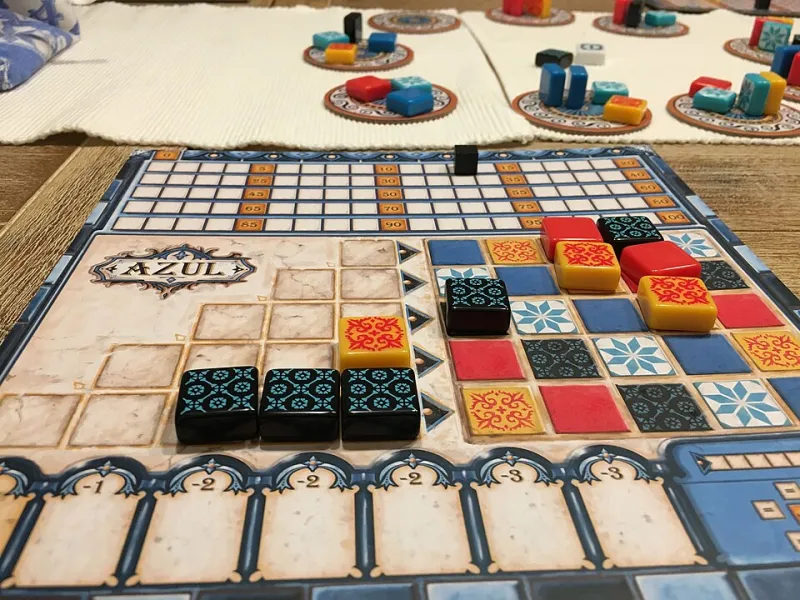
Photo: Gábor Zehetmayer, CC0, via Wikimedia Commons
The back room of a café off the Durham Road, second Wednesday of the month. Six people, one copy of Wingspan, and a noise level you'd normally associate with a library on a wet Tuesday. The muzak is off. The strip lights are off. Two floor lamps are doing the heavy lifting, and there's a felt-lined tray in the middle of the table so the dice land with a thud rather than a crack.
It doesn't look like a revolution. It looks like a nice, civilised game night. But for the people who organise it, and the people who turn up, it's the difference between watching from the doorway and actually sitting down.
"I'd been to plenty of game nights before," says Rowan, a software tester from Bensham who asked us to use a first name only. "I'd get twenty minutes in, the music would be going, someone would be rattling a dice cup next to my ear, and I'd be done. Not upset, just — done. Spent. I'd make my excuses and get the bus home feeling like I'd failed at something everyone else found easy."
Quiet is not the same as silent
The first thing to get straight is that a sensory-friendly session isn't a silent night, and it isn't a separate, gentler hobby for gentler people. It's the same games, played with a bit more care about what's hitting the room's senses.
Most of the hosts we spoke to arrived at it by accident. Someone mentioned that the music was a bit much. Someone else said they'd stopped coming because the lights over the tables gave them a headache. A third person admitted they'd been timing their arrivals to avoid the crowded first half hour. Three separate comments, one obvious conclusion.
"We didn't do a big consultation, we just turned the speaker off and moved a lamp," says Jen, who runs a monthly board game evening in a community room near Saltwell Park. "Honestly, the response was immediate. Two regulars said it was the first time they'd stayed past nine."
The kit does more work than the philosophy
Ask players what actually helps and the answers get wonderfully specific.
Felt-lined dice trays, for a start. Dice towers for anyone who'd rather not fling. Silicon or foam dice where a game doesn't strictly need sharp-edged ones. A table rule that shuffling happens on a cloth, or that whoever's nearest does the shuffling. Cardboard tokens instead of metal coins, because a handful of chunky metal pieces being sorted through is a surprisingly grating sound. No sand timers that hiss. No buzzers, ever.
Seating matters too. An aisle seat means you can get out without climbing over four people and their coats. A seat with a wall behind it means nobody's walking past the back of your head all evening. Neither sounds like much until you've spent a night braced against it.
Signals beat guesswork
The cleverest thing we saw wasn't equipment at all. It was a small stack of cards at the end of the table, in three colours: one saying up for a chat, one saying happy to play, not much chatting, and one saying just here to watch for a bit.
"It takes the pressure off the introduction," says Ade, who runs a fortnightly session in a working men's club in the east of the borough. "You don't have to explain yourself, you don't have to perform being fine, and I don't have to guess. The card does the awkward bit for you."
The same logic applies to leaving. A player who slips out at half nine without a big goodbye shouldn't trigger an inquest. A host who says, once, at the start — "no need to announce anything, doors open, come and go" — has done more for attendance than a month of social media posts.
What venues get wrong
Two things, mostly. The first is assuming sensory-friendly means the whole night. It doesn't. A single quiet table in the corner of a normal evening is often enough, and it means regulars don't lose the night they already love.
The second is turning it into a programme with a capital P. Booking forms, a waitlist, an expectation that attendees self-identify on arrival. The sessions that seem to work best are the ones where nobody has to declare anything to anybody.
"I don't want to be a category on a poster," Rowan says. "I want to turn up, sit in the chair by the wall, play something with a bit of thinking in it, and go home feeling like I had a good night. That's the whole ask."
A practical checklist for Gateshead venues
If you've got a back room and a spare Wednesday, here's where to start.
- Pick one table, not one night. Slot a quiet table into an existing session before you commit to a standalone event.
- Kill the background noise you didn't choose. Jukebox off, sport on silent, hand dryers left alone. You can't fix the 44 bus, but you can fix the speaker.
- Warm the light, don't flood it. Two lamps over one table beats fluorescent panels every time.
- Buy three felt dice trays and a dice tower. Total spend, roughly the price of two new board games. Longer-lasting.
- Put a signals card or a small coloured token on the table. Opt-in, never opt-out.
- Write the house rules on a single sheet. Shuffling on cloth, no buzzers, quiet corner for phone calls.
- Keep an aisle seat free. Don't fill every chair.
- Say the leaving line out loud. "Come and go as you need" — said once, at the start.
- Don't ask anyone why they're here. If they want to tell you, they will.
- Ask afterwards. Two questions: what was too loud, and what was missing. Then change one thing.
The buzz doesn't go anywhere
There's a worry, voiced by at least two landlords we chatted to, that turning the volume down turns the night boring. It doesn't hold up. The noise of a genuinely good game night — the disbelief, the terrible puns, the five-minute argument about whether a rules clarification counts as a house rule — is generated, not piped in.
Take away the PA and the fruit machine and what's left is people leaning over a table, entirely absorbed. That's the sound Gateshead's game nights have always made. Some of us just need the room quiet enough to hear it.