Brushes Down, Barriers Down: Gateshead's Pub Painting Nights Are the Hobby's Friendliest Doorstep
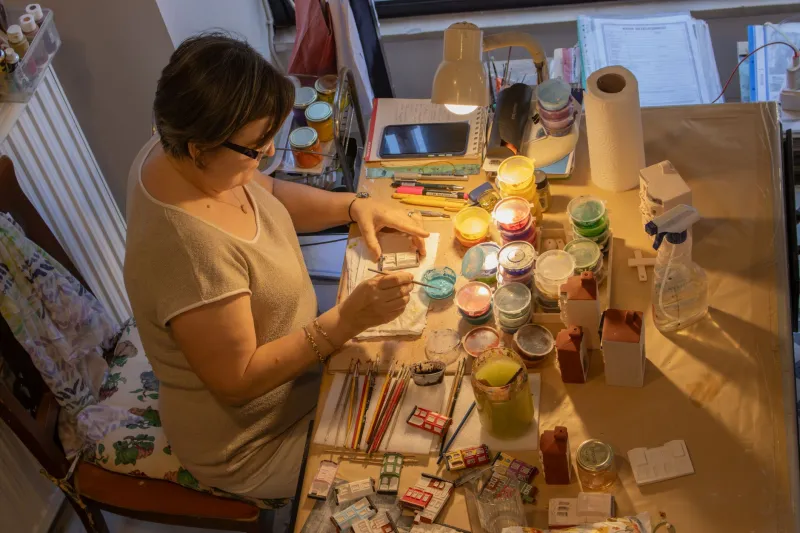
There is a very specific sound that gives away a miniature painting night before you even see the table: the soft click of clippers, the scratch of a mould line coming off, and someone saying "has anyone got a spare 25mm base?" It's not the clatter of dice or the shuffle of cards. It's quieter than that. And in a back room in Low Fell on a Tuesday, it's becoming one of the most welcoming noises in Gateshead's gaming calendar.
First things first: this is not a wargaming night
Let's get the obvious confusion out of the way. Miniature painting and wargaming share a table, a toolkit and roughly the same plastic, but they are not the same evening. A wargaming night has a clock on it. There are points to tally, deployment to argue about, and a result at the end. A painting night has none of that. Nobody wins. Nobody loses. The only measurable outcome is that a small grey figure ends the evening slightly less grey than it started.
That distinction matters more than it sounds. Plenty of people fancy the idea of painting miniatures but bounce off the competitive side of the hobby — the meta-chasing, the "you've thinned that paint wrong" crowd, the sense that you need to know things before you're allowed to start. Painting nights strip all of that out. You turn up, you get a table, you get a lamp, and you get on with it. If you want to talk about edge highlighting, someone will happily talk about edge highlighting. If you'd rather just quietly paint a goblin while a pub quiz murmurs through the wall, that's equally fine.
What an evening actually looks like
The format is almost aggressively simple. Someone — usually a regular with a car and a slightly worrying amount of storage — brings a box of shared kit: a couple of cheap daylight lamps, a tub of water pots, some kitchen roll, a packet of old brushes, and a spray can or two of primer for anyone who forgot. Tables get covered in newspaper or a sacrificial cloth. Then people unpack.
And what people unpack is the interesting bit. You'll get the veteran with a Really Useful Box full of half-finished projects and a personal stash of washes they guard like a bar tab. You'll get the absolute beginner who bought a starter set on a whim and has brought three figures and no clue. You'll get someone kitbashing a Space Marine into something the Emperor definitely didn't sanction. And you'll get at least one person painting a base coat so thick it could stop a bus, who will be gently advised — not scolded — to thin it down a bit next time.
Around nine o'clock, something shifts. The painting slows, the chat speeds up, and the whole thing becomes less about the figures and more about the table. This is the bit that surprises first-timers. The hobby is the excuse; the evening is the point.
Your first night: what to bring, what to leave at home
You genuinely do not need much, and you certainly don't need to spend a fortune before you've painted a single thing. A decent starting kit for a first night in Gateshead looks roughly like this:
- One or two miniatures. A single figure or a small starter set is plenty. Don't turn up with a whole sprue and a plan.
- A brush or two. A cheap size 1 and a size 0 will do more than you think.
- A few paints. Three or four colours is fine. Most nights have a shared pot or two floating about anyway.
- Clippers and a file if you have them. If not, someone will lend you theirs within about ninety seconds.
- Something to take rubbish home in. Mould line dust and snipped-off sprue bits are a nightmare to tidy up off a pub table.
Leave the spray primer at home unless you've checked with the organiser — pubs tend to have opinions about aerosol cans indoors, and rightly so. Leave the magnifying headset at home too, at least for week one. And leave any expectation of finishing a figure at home. Most people get a base coat and maybe one layer done in an evening. That's normal. That's the pace.
The unwritten rule of every painting night I've heard about in the borough is the same: nobody minds a messy first layer. Messy first layers are how everyone starts. The person across the table from you with the beautifully blended cloak also once painted a Stormcast Eternal so thickly that the details disappeared. They remember.
The quiet economy of spare bits
Here's the part that doesn't get talked about enough. Painting nights run on a kind of informal swap market. Someone's got a bag of spare heads. Someone else needs a specific shoulder pad for a conversion. A third person has a wash they bought, hated, and will gladly hand over. Bases, transfers, offcuts, half-pots of Contrast paint — it all circulates.
For anyone on a budget, this is genuinely significant. Miniature painting has a reputation for being expensive, and it can be if you let it. But a painting night in a Gateshead pub is one of the cheapest ways into the hobby going. You're not paying for a course. You're not buying a starter box every month. You're buying a drink, maybe a bag of crisps, and you're learning from people who've already made the mistakes you're about to make.
Why it works here
Gateshead has a long habit of turning a quiet corner of a pub into something social. Darts, dominoes, quiz teams, and now a table of tiny plastic figures under a desk lamp. It fits the borough's grain. The nights aren't slick, they aren't branded, and they don't need to be. They're run by people who wanted somewhere to paint and decided to make one.
If you've been circling the idea of picking up a brush, this is the softest landing the hobby offers. Turn up, bring a figure, borrow a brush, and don't worry about the base. There's always next week for the base.