The Card Already in Your Wallet: Why Gateshead's Libraries Should Be Lending Board Games
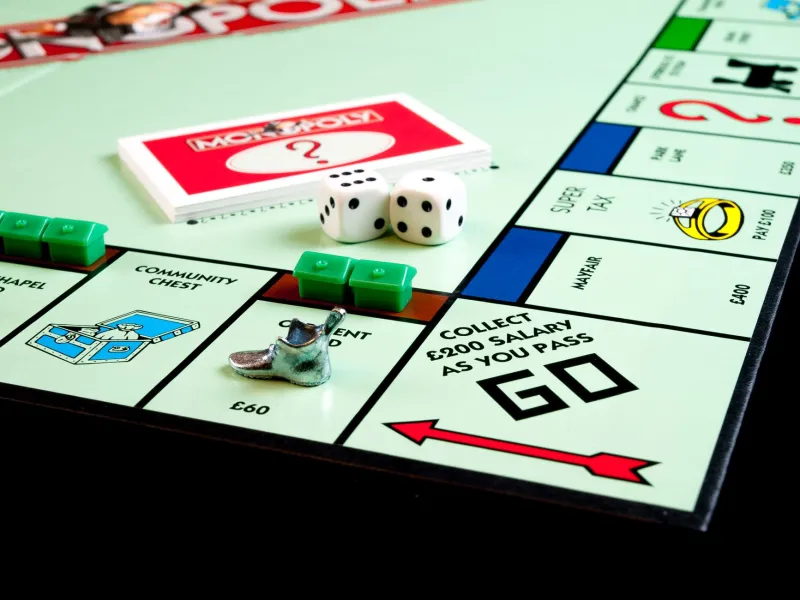
Photo: Fiktube, CC BY-SA 4.0, via Wikimedia Commons
Every few months someone asks me the same question in a slightly embarrassed way: where do I go if I want to try a board game before I buy one? And every time, I give the same unsatisfying answer. A club night. Which is a good answer for some people and a terrible one for plenty of others, because a club night asks you to be a person who goes to club nights.
I think there's a better answer sitting in plain sight, in a building we've already paid for. Gateshead should be lending board games from its libraries.
The gap nobody is filling
The hobby has an expensive front door. A modern board game costs between twenty-five and sixty quid, and you genuinely cannot tell from the box whether your household will play it twice or never. Amazon reviews won't tell you. A video of four Americans shouting at each other over a table won't tell you. You need to sit down with it.
Meanwhile, we have a network of warm, accessible, well-lit buildings with staff who already manage catalogues, memberships and items that get returned slightly damaged. Libraries lend cake tins and energy meters and, in some places, tools and instruments. Games are not a stretch. They are, in fact, more straightforward than a drill.
A library card is a lower door than a night out
Here's the argument I'd put to any councillor who'll listen. The barrier to a game night isn't the games — it's the social arithmetic. You have to arrive somewhere new, at a specific time, walk up to a table of people who already know each other, and admit out loud that you don't know the rules. That's a lot to ask of an adult on a wet Tuesday in February.
A library card asks none of that. You walk in, you browse a shelf, you take a box home, you learn it on your own carpet with your own people. If it's rubbish, it goes back. No audience.
The librarians I've spoken to about this tend to arrive at the same point from a different direction: they see the same families every Saturday, and they see the kids who've outgrown the picture books and stop coming. A games shelf is a reason to come back through the door at eight and at eleven, and to bring a parent who then borrows a novel.
What a workable scheme actually looks like
Not a locked cupboard with three jigsaws in it. That's the version that fails. A working collection needs:
A proper catalogue entry. Each game listed as an item, with player count, playing time and age range in the record. This is the single biggest usability win and it costs nothing but staff time.
A lending period and a replacement policy that don't punish honesty. Standard loan, modest renewal, and a clear statement that missing components should be reported rather than hidden. If a borrower is afraid to tell you the dice are gone, the scheme dies.
A component check at issue and return. Two minutes with a printed contents list. Most games can be counted by weight of habit rather than by individual pieces.
Somewhere to play on site. Even a corner table. Loans get people in the building; a table gets them to stay, and staying is where the conversation starts.
The missing piece problem, taken seriously
Every hobbyist reading this just thought about the same thing: a returned copy of a big-box game with two cards missing and a torn insert. It's a real risk. It is not, however, an unusual one for a library service — the same logic covers a returned jigsaw with 999 pieces and a children's book with a chewed corner. The answer is policy, not pessimism: assume some loss, budget a small replacement pot, and choose the collection accordingly.
Which means the initial shelf should be deliberately robust. No thousand-card legacy games. No heavy euros with thirty plastic types. Card games, roll-and-writes, party games, family titles with a small piece count and a clear list. Anything you can check in ninety seconds.
The rulebook problem
You can lend a game. You can't easily lend the person who explains it. This is the honest weakness of the idea, and it's worth admitting before someone else points it out.
There are two fixes and they work best together. First, only stock games with genuinely good rulebooks, and consider slipping a one-page how-to-play sheet — written in-house, plain English — into each box. Second, and more importantly, borrow a trick from the club scene: a volunteer slot. One afternoon a week, someone who knows the collection sits in the branch and teaches whichever game has gone out most. That's the bridge between a loan and a night out, and it's how a borrower becomes a regular.
The objections, tested against reality
Budget. The stock doesn't have to be bought new. Publisher donations, community group surplus, and a small start-up fund could furnish a decent opening shelf.
Demand. Unknown, and that's fair. Which is why you run it before you roll it out: one branch, one shelf, four months, count the loans. Publish the numbers, good or bad.
Space. Libraries are already reconfiguring constantly. One bay of shelving is not an unreasonable ask.
It's not what libraries are for. It's exactly what they're for. A library is a place where you try things you can't afford to own and learn things you weren't taught. A board game is both.
What would make me wrong
If the borrow rate is nil, and the returns are chaotic, and nobody teaches, then I'm wrong and the shelf should go back to being a shelf. But I don't think that's what would happen. I think the first copy of a decent family game would be out more or less permanently, and someone in that queue would end up at a table on a Tuesday night with people they'd never met.
And that's the whole case, really. The club nights will keep doing what they do. But there's a whole layer of the borough who'd rather borrow first and socialise later, and we have a building on nearly every high street with the card in their pocket already.