Tables, Not Focus Groups: How Gateshead Became an Indie Playtesting Pub
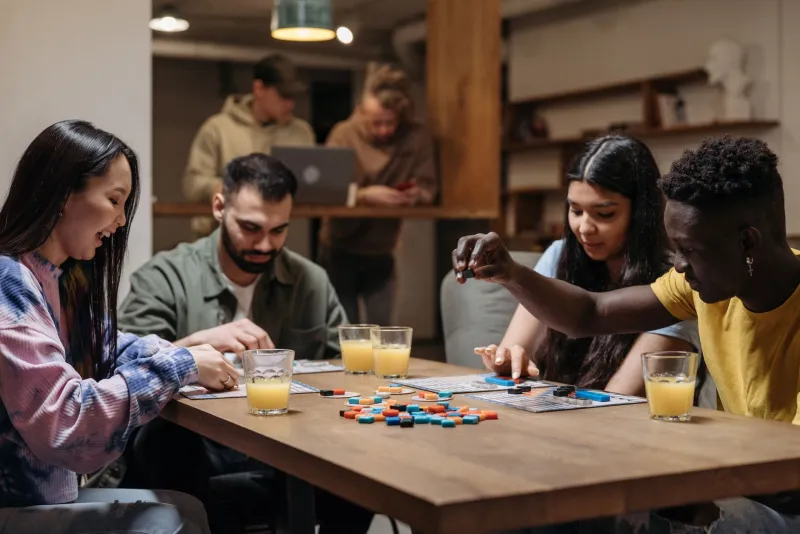
On a wet Tuesday in Low Fell, the loudest table in the café is not selling anything. There is a stack of cards with handwritten rule changes, a laptop showing a grey-box build of a platformer, and four strangers arguing — politely — about whether a dice roll should happen before or after a move. Welcome to grassroots playtesting in Gateshead. In 2026, some of the most useful games research in the North East is happening on pub benches, in community rooms and at library tables, not in a glass-walled studio.
Why the pub table beats the focus group
Big studios can rent a lab, print a questionnaire and watch through one-way glass. That has its place. But a lab cannot easily recreate the glorious mess of a real table: someone's phone buzzing, a latecomer joining halfway through, a player who has never touched a hobby game before, and a rules explanation that has to survive a noisy room.
Gateshead's indie scene is not one big monolith. It is solo hobbyists with a notebook full of card ideas, small tabletop teams hauling prototype boxes between venues, and digital makers testing builds on laptops and handhelds. What links them is a preference for fast, honest feedback from people who are not being paid to be nice. A playtester in Bensham will tell you the rulebook is confusing because it is confusing. That is worth more than a hundred polite nods.
What local playtesting actually looks like in 2026
Not every session is a board game. A typical evening might have a tabletop card game on one table, a co-op dice game on another, and a digital prototype running on a laptop in the corner. Devs are increasingly bringing print-and-play files, quick accessibility checks and short feedback forms rather than expecting anyone to sign their life away.
The format is usually simple: a short pitch, a rules teach, a 20-minute round, then a structured chat. Good hosts ask specific questions. Not 'did you like it?' but 'where did you get stuck?' and 'what did you think you were supposed to do next?' Players are not there to design the game for the developer. They are there to expose the bits that only make sense inside the designer's head.
That is why the borough's informal labs matter. A game that works in a quiet room with three designers can fall apart when a family of four tries it after Sunday lunch. A digital build that feels fine with a mouse can feel awful on a controller. Gateshead's mixed crowd — commuters, students, parents, retirees, hobbyists and curious passers-by — is a useful reality check.
How to get involved without a game design degree
You do not need to be a designer to be a good playtester. You need patience, a willingness to say what you actually thought, and the ability to separate 'this is not for me' from 'this is broken'.
- Follow the local boards. Keep an eye on the Gateshead Gaming events board, community centre noticeboards, library listings and local game shop windows. Playtests often appear at short notice because a dev has a free room and a prototype that needs fresh eyes.
- Ask venues. Cafés and pubs with a quiet back room are often happy to host a small session on a weeknight. If you know a venue with good tables and no deafening music, say so.
- Turn up as a player first. You do not have to bring anything except curiosity. Devs usually provide everything, including the awkward rules explanation.
- Be specific. 'The turn order confused me' is useful. 'It was fine' is not. If you got stuck, say where. If you stopped having fun, say when.
- Respect the prototype. Some builds are confidential, some are held together with tape, and some will change completely next week. Ask before taking photos or sharing details.
- Offer accessible feedback. If the text was too small, the colours were hard to tell apart, or the rules assumed too much prior knowledge, that is valuable information. Grassroots playtesting should include more people, not fewer.
- Host a table. If you run a community room, a library group or a workplace social, offer a corner for a local dev. The overheads are low and the goodwill is high.
Why a Gateshead table matters beyond Gateshead
Games tested in the borough do not stay in the borough. They go to Kickstarter, Steam, conventions and kitchen tables in other countries. A rulebook clarified in a Gateshead café can make a game easier to learn in Canada. An accessibility fix spotted in a community room can widen a game's audience everywhere.
That is the quietly radical part of this scene. Playtesting is often treated as a stage in a product pipeline, something that happens after the 'real' work. Here it is part of the social fabric. It gives local players a stake in the games they might eventually buy, and it gives local devs a feedback loop that is fast, affordable and refreshingly blunt.
The ask
Devs: book the table, bring the rough version, and do not wait until the game is polished. Players: say yes to a session, even if you are not sure you are the target audience — especially if you are not. Venues: offer a quiet corner and a jug of water. Gateshead already has the people, the places and the opinions. In 2026, the playtesting lab is just a pub table with better lighting.